Dry Cleaners and Property Environmental Risk
October 2026 · 5 min read
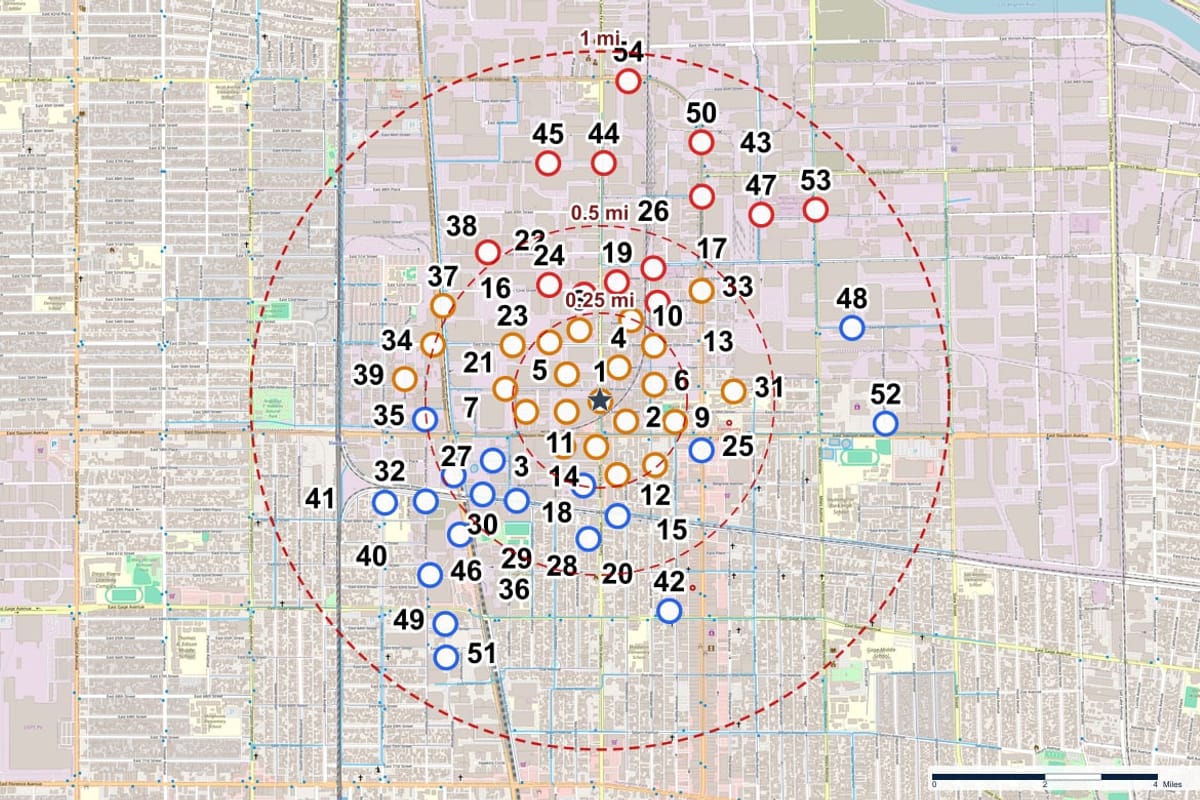
Why dry cleaners come up so often
For decades, many dry cleaners used chlorinated solvents, most commonly perchloroethylene (PCE, also called tetrachloroethylene). Solvent was stored on site, run through machines and disposed of as waste. Spills, leaking equipment and waste handling practices of earlier decades could release it to soil, groundwater and sewer lines.
Why the chemistry makes cleanup difficult
PCE is denser than water and does not mix with it readily. When it reaches groundwater, it can sink and spread in ways that are hard to map. Over time, PCE can also break down into other chlorinated compounds, including trichloroethylene (TCE) and vinyl chloride. Because solvents can also give off vapors, a dry cleaner is a typical reason for a vapor intrusion question in a nearby building.
Where it appears in the records
A dry cleaner can show up in several places:
- Hazardous waste generator records, because solvent waste is regulated.
- State cleanup and release databases.
- A number of states run dry cleaner programs and cleanup funds, so a state listing may exist even when no federal record does.
- Historical sources, such as old city directories, which can show a dry cleaner in an earlier building use that no longer appears in current databases.
A cleaner may be listed under a business name that does not say "dry cleaning." Looking at the listed activity, not only the name, helps.
Subject property versus neighbor
A dry cleaner on the property itself is a direct question about the property's history. A dry cleaner nearby is a question about whether a release could have reached the property, which depends on distance, status, what was released and the local ground conditions. Elevation alone does not tell you which way groundwater moves, so a nearby record should be treated as something to verify, not as proof either way.
What to do
- Search the records within and around the property for dry cleaner and solvent-use listings, including closed ones.
- Note each listing's status and what the database says was released.
- If the property or a very close neighbor has a history of solvent use, ask an environmental professional whether a Phase I with possible sampling is appropriate before closing.
- Ask the seller and the property manager about past tenants.
A Geoscope report maps nearby listed locations and shows what each source reports. It is not a Phase I ESA and does not confirm that contamination is or is not present.
This article is general information, not a legal or health opinion.
Related
Ready to screen a property?
A Geoscope Government Records Report is your fast first step: database screening across 1,500+ sources, GIS-mapped results, delivered in 24 hours for $79.
View Pricing & Order →