All Appropriate Inquiries and Landowner Liability
October 2026 · 6 min read
Why a buyer needs to know this
Under the federal Superfund law (CERCLA), the current owner of a contaminated property can be held responsible for cleanup, even if a previous owner caused the contamination. Buyers do not have to accept that risk blindly. Congress added landowner liability protections in 2002, and the main one for purchasers is the bona fide prospective purchaser (BFPP) defense. The protections are not automatic. They depend on what the buyer does before and after closing.
What All Appropriate Inquiries is
All Appropriate Inquiries (AAI) is the investigation a buyer must complete before acquiring a property to qualify for the CERCLA landowner liability protections. The EPA sets the requirements in a federal rule, 40 CFR Part 312. The rule has been in effect since November 2006.
The rule lists the parts of an inquiry:
- Interviews with past and present owners, operators and occupants.
- A search for recorded environmental cleanup liens.
- A review of federal, tribal, state and local government records.
- A visual inspection of the property and the properties next to it.
- A declaration by the environmental professional who conducted or supervised the work.
The rule requires that the inquiry be carried out by, or under the supervision of, an environmental professional, a term the rule defines by education and experience.
How it connects to a Phase I ESA
Most buyers meet the AAI requirement by commissioning a Phase I Environmental Site Assessment that follows ASTM E1527-21. The EPA recognises that standard as compliant with the AAI rule. A Phase I is the usual way to complete AAI. A records search on its own is not.
What the BFPP defense also requires
Completing AAI is the first condition. After the purchase, the owner has continuing obligations, including:
- Taking reasonable steps to stop continuing releases, prevent new ones and limit exposure to earlier ones.
- Complying with any land use restrictions or institutional controls on the property.
- Cooperating with and giving access to those carrying out a cleanup.
- Providing legally required notices.
- Exercising appropriate care for any hazardous substances found on the property.
A buyer who completes a Phase I but ignores these duties after closing can lose the protection.
Where a records search fits
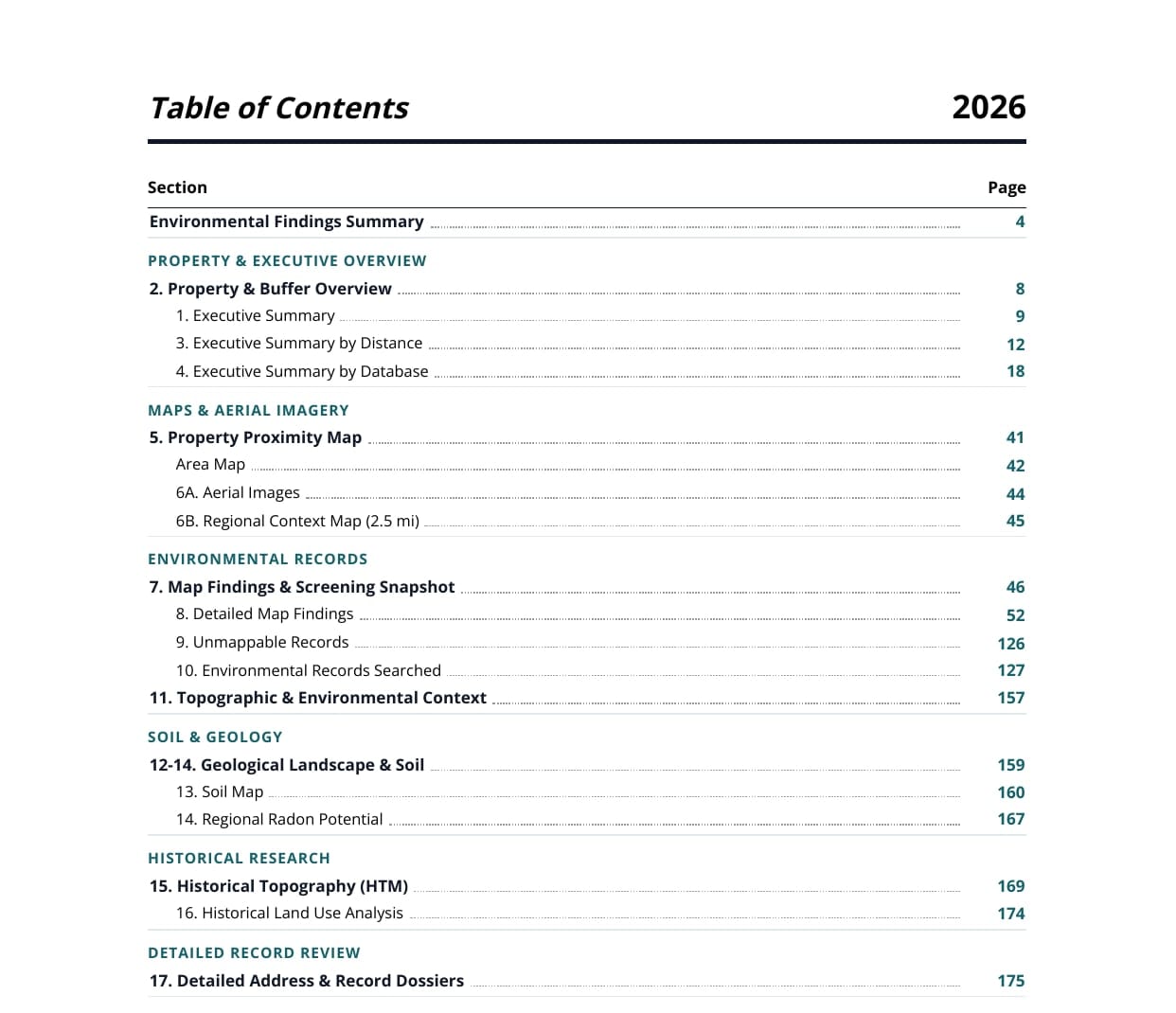
The government records review is one of the AAI components. A mapped records search shows which regulated facilities, cleanup sites, tanks and other listed locations sit near the property, and what the databases say about their status. Geoscope produces that kind of report. It is useful early, to decide whether a full Phase I looks necessary and what to ask the seller. It is not an AAI, it is not a Phase I ESA, it does not include interviews or a site visit, and it is not a legal opinion.
What to do
- Decide early whether liability protection matters for the deal. For most commercial acquisitions with financing, it does.
- Order a Phase I from a qualified environmental professional before the purchase closes.
- Keep the report dates in mind. See our article on how long a Phase I ESA stays valid.
- Ask your attorney about the continuing obligations that apply after closing.
This article is general information. It is not legal advice. Confirm the requirements that apply to your transaction with an attorney.
Related
Ready to screen a property?
A Geoscope Government Records Report is your fast first step: database screening across 1,500+ sources, GIS-mapped results, delivered in 24 hours for $79.
View Pricing & Order →